
Provide the domain and selector or send a test email.
Check DKIM.
A standalone DKIM checker is planned so Sendlander can show whether signed mail aligns with the sender domain.
Planned: standalone DKIM checker is not live yet.
Test before every send.
Validate the public key record.
Show DKIM status in the report.
Fix with evidence.
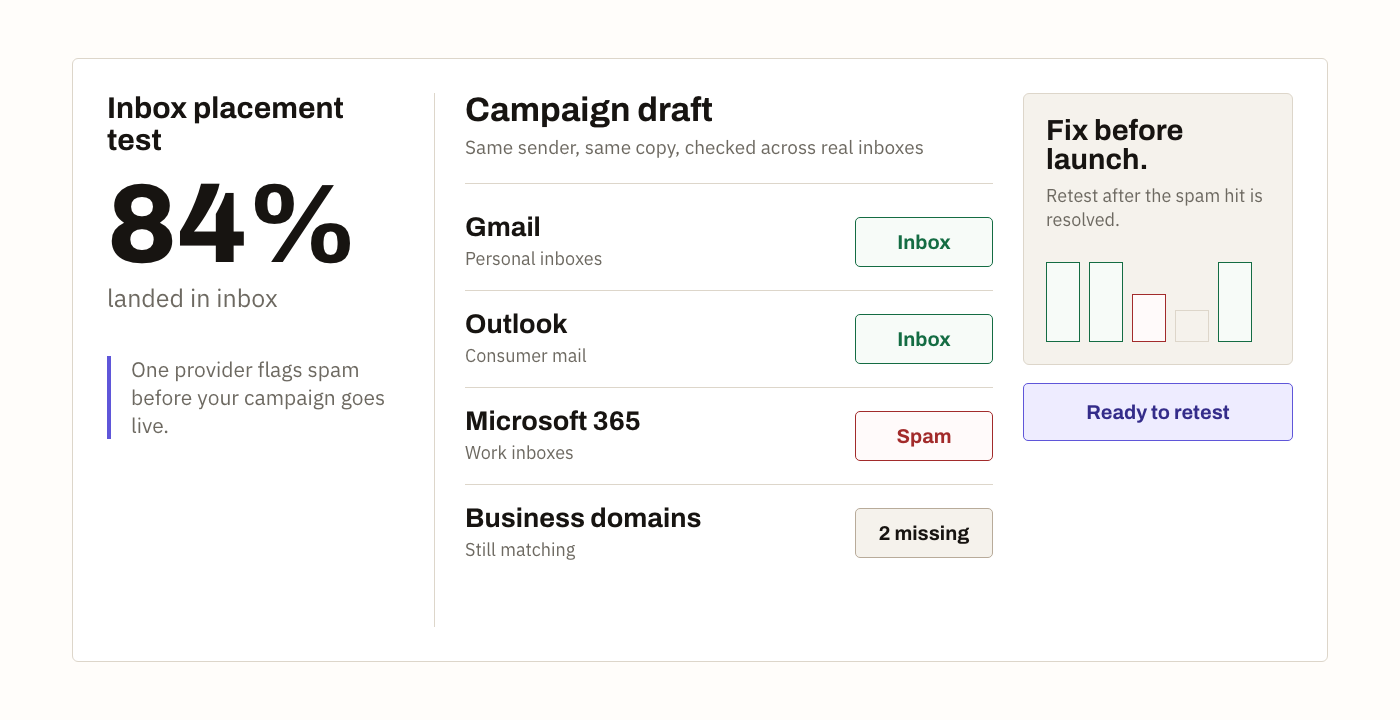
See the provider outcome, make one defensible change, and retest the same sending path.
When to use this
DKIM checker is useful for teams validating whether real messages are signed by the expected domain. The job is to connect DKIM selector and signing-domain checks to placement reports, using evidence that is specific to the sender and message path under test.
The main risk is assuming DKIM is enabled globally while one sending platform or subdomain is not signing correctly. Sendlander keeps the workflow grounded by tying the page back to real reports, real seed results, and visible diagnostic checks instead of generic deliverability advice.
What the report should prove
The useful evidence includes DKIM result, signing domain, selector evidence, visible From domain, and organizational-domain alignment. These signals help separate a broad sender problem from a provider-specific issue or a temporary pending state.
The checks to review are selector records, public key availability, delivered DKIM headers, and whether signing aligns with the sender identity. The result should lead to one or two concrete fixes, not a vague list of every possible deliverability concern.
How to act on it
A practical workflow is to verify or infer the selector, send a test email, inspect the delivered header, then fix signing before retesting. After each meaningful change, rerun a comparable test so the team can tell whether placement improved.
Use this page as an entry point into the product, then save the report in the dashboard when the result matters. Saved reports make follow-up tests easier to compare and keep the next fix tied to evidence.
Quick answers.
Do I need to know my selector?
The standalone lookup may need it. A delivered-message analysis can infer selectors from headers.
Does DKIM guarantee inbox placement?
No. It helps authentication and trust, but mailbox placement uses many signals.