
Generate recipients in Sendlander.
Test deliverability before the campaign goes live.
A receiving server can accept an email that lands in Spam or Promotions. Test the final sender and message across provider inboxes before launch.
Last reviewed 2026-08-20
Test before every send.
Send from your ESP, CRM, or SMTP tool.
Review inbox placement, spam hits, and pending inboxes.
Fix with evidence.
See the provider outcome, make one defensible change, and retest the same sending path.
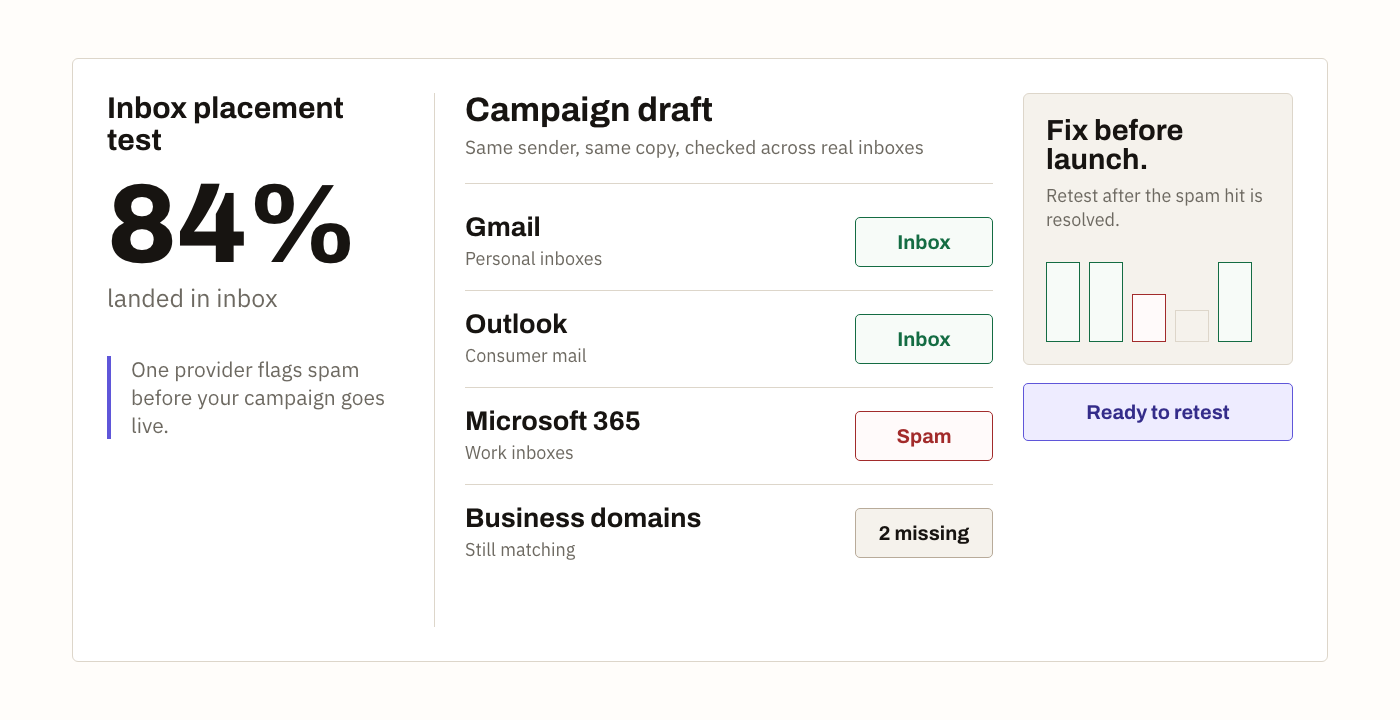
Delivered is not the same as inbox
A delivery metric normally means the receiving server accepted the message without a hard bounce. The accepted copy can still land in Inbox, Promotions, Spam, or another folder. Sendlander observes placement in controlled seed accounts so the result answers a different and more specific question.
Use real campaign delivery logs for audience-wide acceptance and seed placement for controlled folder outcomes. Neither should be stretched into a promise about every recipient.
What the test includes
The workflow keeps your normal sending platform in the loop. Send the final production-like message to prepared recipients with its tracking token, then read provider and account-segment outcomes as they match.
The report combines placement with prioritized evidence and links to relevant authentication, domain, content, and blacklist repairs. It does not claim to retrieve a single universal reputation number from every provider.
Provider coverage matters more than one perfect inbox
Gmail, Outlook, Yahoo, Google Workspace, Microsoft 365, and private business gateways do not apply one shared filter. The prepared seed list shows the provider and account mix available for the current run. Read those groups separately before you rely on the aggregate result.
A personal Gmail success does not clear a Microsoft 365 problem, and a business gateway failure does not prove the sender is broken everywhere. Provider-level placement turns one vague deliverability complaint into a smaller investigation with an owner and a relevant data source.
Authentication, reputation, and message evidence
Authentication tells a provider whether the message can be connected to the visible sender. Reputation evidence describes the recent behavior associated with the domain or IP. The message adds its links, structure, identity, and offer. None of those inputs is the whole decision, so the report keeps them subordinate to the observed placement result.
When SPF, DKIM, and DMARC pass but one provider still filters the message, move to that provider's reputation data, audience response, sending pattern, and the final tracked links. When authentication fails broadly, repair the identity path before spending hours on subject lines.
When to test and retest
Test before high-value campaigns, when a provider's open or response pattern changes, after switching ESP or tracking domain, after authentication edits, and before materially increasing volume. Keep the message representative and the provider mix stable.
After a fix, change one major variable where possible. A comparable result can support the hypothesis; a different sender, platform, template, and seed set cannot.
What this test cannot know
It cannot reproduce each subscriber's prior interactions, contacts, rules, or corporate gateway. It cannot make an unwanted audience safe. It cannot guarantee tomorrow's provider decision.
It can show whether a production-like email is already failing across controlled providers, narrow a provider-specific investigation, and give the team a baseline for a repair.
How this differs from a mail-server check
A mail-server check is excellent for DNS, TLS, reverse DNS, blocklist context, and message construction. It may send to one analysis address and produce a detailed configuration score. Sendlander sends the final message to a provider seed mix and reports the folders that actually received it.
Use server diagnostics to repair a broken foundation and placement testing to evaluate the final route across providers. The two views reinforce each other when they are allowed to keep their different jobs.
Quick answers.
What does this test measure?
It measures where seed inboxes receive the email. It does not guarantee every real recipient will see the same placement.
Can I test cold email campaigns?
Yes, but you are responsible for the legality and permission basis of your campaigns.